
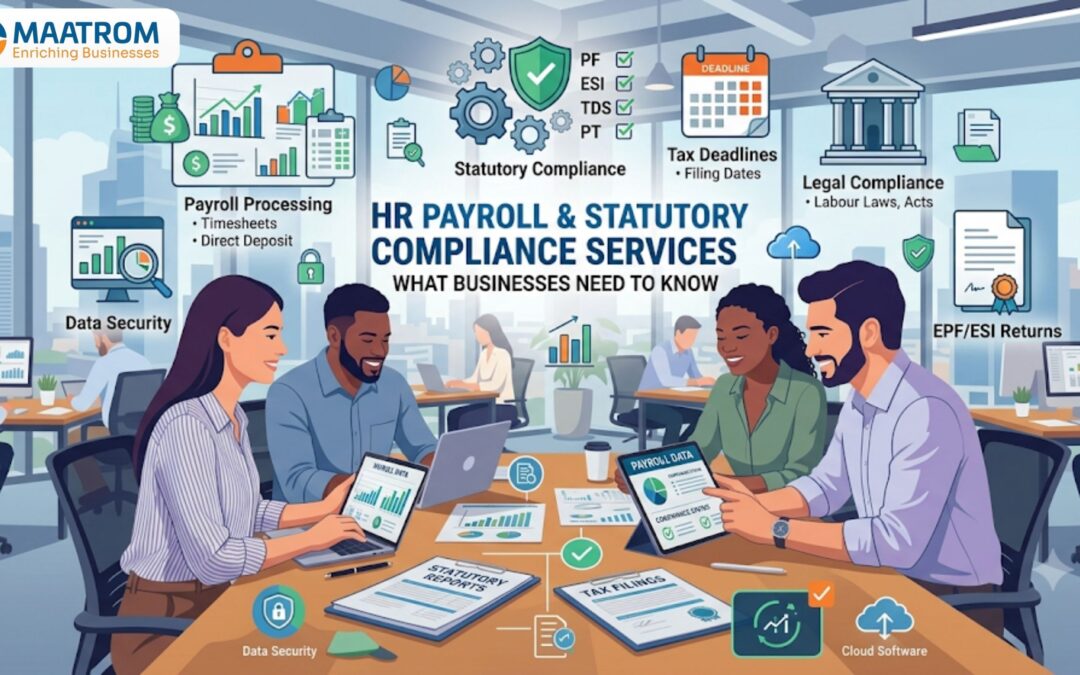
As a company grows, these responsibilities can become complex and time-consuming. This is where HR Payroll & Statutory Compliance Services can help. Professional payroll and compliance support allows businesses to manage salary processing, employee data, statutory deductions, and compliance requirements in a structured way. For many companies, payroll outsourcing is a practical way to manage these responsibilities without building a large internal payroll team. We explain payroll services, statutory compliance, payroll compliance, and end-to-end compliance support.
What Are HR Payroll & Statutory Compliance Services?
HR Payroll & Statutory Compliance Services combine payroll management with the statutory responsibilities that an employer must follow.
Payroll involves calculating and processing employee salaries. It may include: Basic salary, Allowances, Deductions, Incentives, Overtime, Leave adjustments, Bonuses, Reimbursements & Tax deductions. Statutory compliance refers to meeting applicable legal and regulatory requirements related to employees and payroll.
Provident Fund (PF), Employee State Insurance (ESI), Professional Tax (PT), where applicable, Tax Deducted at Source (TDS), Labour law requirements, Payroll records and documentation, Statutory filings and payments.
The exact requirements can vary based on the company’s location, employee strength, salary structure, industry, and applicable laws. A professional payroll service can help businesses organize these activities and maintain a consistent payroll process.
Why Is Payroll Compliance Important?
Payroll is one of the most sensitive functions in an organization. Employees expect their salaries to be accurate and paid on time. Incorrect employee payments, Wrong deductions, Delayed statutory payments, Incorrect records, Additional administrative work, Employee dissatisfaction and Compliance concerns
What Does a Payroll Service Include?
A professional payroll service can cover different activities depending on the company’s requirements.
Common payroll activities include:
1. Employee Data Management
Payroll starts with accurate employee information. This may include: Employee ID, Joining date, Salary details, Bank information, Attendance, Leave information, Statutory details and Tax information.
2. Salary Processing
Salary processing involves calculating the monthly salary for employees. The payroll team may consider attendance, leave, overtime, incentives, deductions, and other salary components.
3. Payroll Deductions
Payroll may include various deductions based on employee details and applicable requirements. These may include statutory deductions, tax deductions, employee contributions, or other approved deductions.
5. Payroll Reports
Payroll reports help management understand monthly salary expenses and employee-related payroll information.
Reports may include:
- Salary statements
- Payroll summaries
- Deduction reports
- Statutory reports
- Tax-related reports
Good reporting makes payroll easier to review and manage.
What Is Statutory Compliance?
In HR and payroll, statutory compliance can cover several areas. Businesses need to understand which requirements apply to them and complete the relevant processes within the required timelines. A statutory service provider can support businesses by helping organize these activities and maintain the required records. The objective is simple: keep payroll and HR processes aligned with applicable statutory requirements.
Major Areas of Payroll Compliance
Payroll compliance can involve several important areas.
Provident Fund (PF) Compliance
PF is an important employee-related statutory requirement for eligible establishments and employees.
PF-related payroll activities may include:
- Employee contribution calculation
- Payroll deductions
- Monthly records
- Payment-related processes
ESI Compliance
Employee State Insurance, commonly known as ESI, provides social security benefits to eligible employees under the applicable rules.
Payroll-related ESI activities may include:
- Identifying eligible employees
- Calculating contributions
- Maintaining records
- Completing relevant compliance activities
Businesses should ensure that ESI-related payroll information is accurate and updated.
TDS Compliance
Tax Deducted at Source, or TDS, can form an important part of payroll management. Employers may need to calculate applicable tax deductions based on employee salaries and relevant tax rules.
- TDS calculations
- Salary-related tax deductions
- Tax reports
- Applicable statements and documentation
Accurate employee tax information is important for effective payroll processing.
Professional Tax Compliance
Professional Tax may apply depending on the state and the applicable rules.
What Is End-to-End Compliance?
End-to-end compliance regulatory compliance refers to the complete handling of manging regulatory obligations from identifying new and evolving rules. Employee data → Payroll calculation → Statutory deductions → Review → Payment → Filing → Record maintenance
Benefits of Outsourcing Payroll and Compliance
1. Saves Time
Payroll processing involves repetitive monthly activities. Outsourcing allows the internal HR team to spend more time on recruitment, employee engagement, training, performance management, and other strategic HR activities.
2. Reduces Manual Errors
Payroll involves calculations and employee data. Manual processes can increase the possibility of mistakes. A structured payroll process can help reduce errors and improve consistency.
3. Supports Compliance Management
Statutory requirements can change, and businesses need to keep track of applicable rules and timelines. Professional support can help organizations manage compliance activities in a more systematic way.
4. Improves Data Management
Payroll generates a large amount of employee information. A professional payroll process helps organize salary records, deductions, reports, and other payroll documents.
5. Provides Better Payroll Visibility
Management needs to understand employee costs and payroll expenses. Regular payroll reports can provide useful information for financial planning and decision-making. This can reduce the administrative workload for HR and management teams.
Payroll Outsourcing vs. In-House Payroll
Businesses can manage payroll internally or outsource it to a professional service provider. With an in-house model, the company manages payroll calculations, employee data, compliance activities, reports, and related tasks using its own team.
In-house payroll
An in-house payroll process can provide direct control.
- Payroll employees
- Payroll software
- Training
- Compliance knowledge
- Internal review processes
- Backup resources
Payroll outsourcing
Payroll outsourcing can provide access to professional payroll support without requiring the business to build a large payroll function internally. It can be useful for businesses that want to reduce administrative work and focus on their core operations. The right option depends on the organization’s size, resources, payroll complexity, and business requirements.
Why Businesses Choose Maatrom for Payroll and Compliance Support
Maatrom HR Solution provides HR and payroll support designed to help businesses manage employee-related processes more efficiently.
Our HR Payroll & Statutory Compliance Services can support businesses with payroll management and applicable compliance activities.
The focus is on creating a structured process that helps businesses manage:
- Payroll processing
- Employee payroll data
- Payroll compliance
- PF-related compliance
- ESI-related compliance
- TDS-related payroll requirements
- Professional Tax-related requirements
- Statutory documentation
- Compliance reporting
- End-to-end payroll support
Why End-to-End Payroll Compliance Matters
Payroll and compliance are connected. Employee status can affect eligibility. Changes in salary or employment details can affect payroll calculations. An integrated approach connects the different stages of the payroll process. This is why end-to-end compliance can be valuable for organizations that want a more organized payroll system.
Common Payroll and Compliance Mistakes
Common issues include: Incorrect employee information, Incorrect salary calculations, Missed payroll inputs, Incorrect deductions, Delayed compliance activities, Poor record management, Manual calculation errors, Lack of payroll review, Inconsistent employee data, Failure to track applicable requirements.
Conclusion
Managing payroll is an important responsibility for every organization. HR Payroll & Statutory Compliance Services provide a structured way to manage these responsibilities. From payroll processing and employee data management to PF, ESI, TDS, Professional Tax, statutory documentation, and reporting, professional payroll support can simplify complex administrative activities. For businesses looking to reduce manual work, improve payroll accuracy, and manage compliance more effectively, payroll outsourcing can be a practical solution.
Maatrom HR Solution helps businesses manage payroll and HR compliance through professional support and structured processes. With the right payroll service, businesses can spend less time managing administrative tasks and more time focusing on people, productivity, and growth.
Frequently Asked Questions
1. What are HR Payroll & Statutory Compliance Services?
HR Payroll & Statutory Compliance Services help businesses manage employee payroll along with applicable statutory and regulatory requirements. These services can include payroll processing, deductions, statutory records, reporting, and compliance support.
2. What is payroll outsourcing?
Payroll outsourcing is the process of using an external professional provider to manage some or all payroll activities. It can reduce administrative work and provide access to payroll expertise.
3. What is end-to-end compliance?
End-to-end compliance refers to managing the complete compliance workflow, from collecting employee information and calculating payroll to completing applicable statutory activities and maintaining records.
4. What statutory areas are commonly connected with payroll?
Depending on the business and applicable rules, payroll may involve PF, ESI, TDS, Professional Tax, labour law requirements, and other statutory obligations.
5. Can small businesses outsource payroll?
Yes. Small businesses can use payroll outsourcing to access professional payroll support without maintaining a large internal payroll team.
6. How can payroll outsourcing help HR teams?
Payroll outsourcing can reduce repetitive administrative work and allow HR teams to focus more on recruitment, employee engagement, training, performance management, and other HR activities.
Recent Comments