
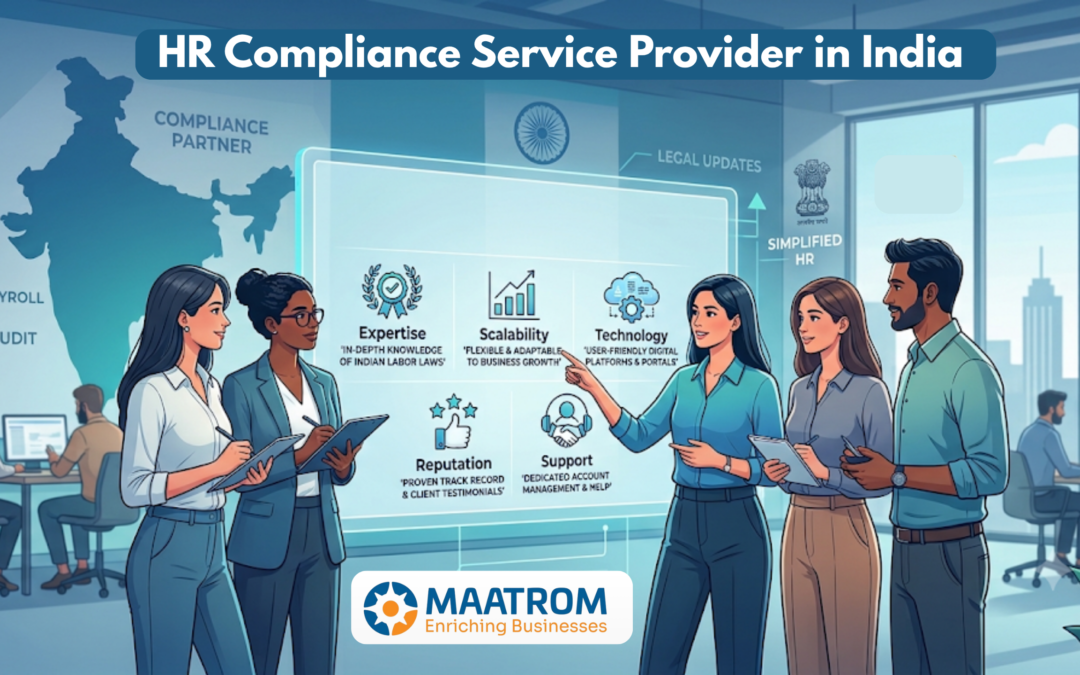
Managing employees is an important responsibility for every business. Salary processing, employee records, Provident Fund (PF), Employees’ State Insurance (ESI), Professional Tax (PT), Tax Deducted at Source (TDS), Labour Welfare Fund, labour law requirements, and other statutory responsibilities need to be handled properly and on time. A professional HR compliance provider can support businesses with payroll management, statutory compliance, employee documentation, reporting, and other HR-related processes.
What Is an HR Compliance Service Provider?
An HR compliance service provider is a professional company that helps businesses manage applicable employee-related legal, statutory, and HR requirements.
- Payroll management
- PF/ ESI compliance
- Professional Tax compliance
- TDS-related payroll support
- Labour Welfare Fund compliance
- Statutory records and documentation
Why Is HR Compliance Important for Businesses?
HR compliance is not simply an administrative activity. It is an important part of responsible business management.
- Incorrect statutory deductions
- Delayed payments or filings
- Compliance notices
- Penalties or additional costs
- Incorrect employee records
- Additional administrative workload
A structured compliance process helps businesses manage employee-related responsibilities more efficiently. Changes in employee salary, attendance, leave, deductions, or employment status can affect payroll calculations and applicable statutory requirements.
Choose an HR Compliance Service Provider in India
1. Check Their HR and Compliance Experience
The first factor to consider is the provider’s experience. HR compliance can involve different requirements depending on the organization. A provider with relevant experience can better understand common payroll and compliance challenges and help establish a structured process.
2. Understand Their Payroll Process
Payroll and compliance are closely connected.
A structured payroll process may include:
- Employee data collection
- Attendance and leave input
- Salary structure verification
- Salary calculation
- Deductions and statutory calculations
- Payroll review
- Payslip generation
- Payroll reports
- Applicable statutory payments and filings
- Monthly compliance documentation
A clearly defined process can reduce confusion and improve consistency. Maatrom HR Solution’s payroll services include payroll processing, employee payroll data management, salary-related activities, payslip generation, payroll reporting, and statutory compliance support.
3. Look for Knowledge of Indian Statutory Requirements
Indian HR compliance involves several statutory requirements, and their applicability can differ based on the organization and employees.
Provident Fund (PF):
PF-related compliance involves applicable employee and employer contributions, records, and statutory processes.
Employees’ State Insurance (ESI):
ESI-related responsibilities may include employee eligibility, contributions, records, and applicable filings.
Professional Tax (PT):
Professional Tax requirements depend on the applicable state rules and employee circumstances.
TDS:
Payroll-related TDS requires appropriate tax calculations, deductions, records, and reporting.
Labour Welfare Fund:
Applicable Labour Welfare Fund requirements should be considered based on the relevant state and employee circumstances.
4. Evaluate Data Security and Confidentiality
Payroll contains sensitive information. Employee salary details, bank information, personal information, tax-related information, and employment records must be handled carefully. Data security should be treated as an important part of the vendor selection process.
5. Check Communication and Client Support
Compliance often involves deadlines and time-sensitive activities. A good provider should have a clear communication process for:
- Monthly payroll inputs
- Missing employee information
- Payroll approvals
- Compliance requirements
- Reports
- Queries
- Changes in employee details
- Compliance updates
Ask how you can contact the team and how issues are handled. Good communication can make outsourced HR and payroll management easier for the internal HR, finance, and management teams.
6. Check the Provider’s Reporting Process
Reports help businesses understand payroll and compliance activities. Depending on the agreed scope, reports may include: Employee salary details, Deduction reports, Statutory contribution reports, Attendance-related reports, Payroll registers and Compliance reports
Benefits of Working With a Professional HR Compliance Provider
Choosing the right HR compliance service provider can provide several benefits.
Reduced Administrative Work
Outsourcing routine payroll and compliance activities can reduce the workload on internal HR and finance teams.
Better Payroll Organization
A structured payroll process can help businesses manage employee salary information, deductions, reports, and documentation more efficiently.
Compliance Support
Professional support can help businesses organize applicable statutory requirements and maintain relevant records.
Access to HR Expertise
Businesses can access professional HR and payroll knowledge without necessarily building a large internal compliance team.
Conclusion
Choosing the right HR compliance service provider in India is an important decision for businesses of every size. Payroll and statutory compliance require proper planning, accurate employee information, timely processes, documentation, and continuous attention.
The right HR compliance provider can help reduce administrative workload, organize payroll operations, support applicable statutory requirements, and allow management teams to focus more on their core business.
Maatrom HR Solution provides payroll management, HR payroll, statutory compliance, recruitment, staffing, and HR consultancy services to support businesses with their workforce requirements.
Frequently Asked Questions
1. What are HR compliance services?
HR compliance services help businesses manage applicable employee-related statutory, legal, payroll, documentation, and reporting requirements. Depending on the organization, this may include PF, ESI, Professional Tax, TDS, Labour Welfare Fund, and other applicable requirements.
2. Why should a business hire an HR compliance service provider?
Businesses can hire an HR compliance provider to reduce administrative workload, improve payroll processes, organize compliance activities, and access professional HR and payroll expertise.
3. What statutory compliance services are commonly required in India?
Depending on the organization and employee eligibility, requirements may include PF, ESI, Professional Tax, TDS, Labour Welfare Fund, and other applicable labour and employment-related compliance requirements.
4. Can small businesses outsource HR compliance?
Yes. Small and growing businesses can outsource HR compliance to reduce administrative workload and access professional support without necessarily maintaining a large internal HR compliance team.
5. How does payroll outsourcing help businesses?
Payroll outsourcing can help businesses organize salary processing, employee payroll data, payslips, deductions, payroll reports, and applicable statutory compliance activities through a structured external process.
6. How can I get started with Maatrom HR Solution?
Businesses can discuss their employee strength, locations, payroll structure, existing HR processes, and compliance requirements with Maatrom HR Solution. Based on these requirements, the appropriate HR payroll and compliance support can be discussed.
Recent Comments