Introduction
Managing human resources is essential for every business, regardless of its size or industry. From recruiting employees and processing salaries to maintaining employee records and complying with labour laws, HR teams handle several important responsibilities. However, managing all these activities internally can become challenging, particularly for startups, small and medium-sized enterprises (SMEs), and growing businesses.
This is where HR as a Service (HRaaS) becomes useful. It allows businesses to access professional HR support and services without having to build a large, fully equipped HR department for every function.
With HRaaS, companies can outsource selected HR activities, such as recruitment, payroll management, employee documentation, and statutory compliance, to an external HR service provider. This approach helps businesses manage HR operations more efficiently while allowing their internal teams to focus on business priorities.
At Maatrom HR Solution, we understand that every organisation has different workforce requirements. Our services include recruitment and staffing, payroll management, HR consultancy, and statutory compliance support to help businesses manage essential HR activities.
In this blog, let us understand what HRaaS means, how it works, its key benefits, and how businesses can decide whether it is the right approach for their HR needs.
What Is HR as a Service (HRaaS)?
HR as a Service, commonly known as HRaaS, is a service model in which businesses obtain human resource support from an external service provider. Instead of managing every HR function internally, companies can outsource selected activities based on their operational requirements.
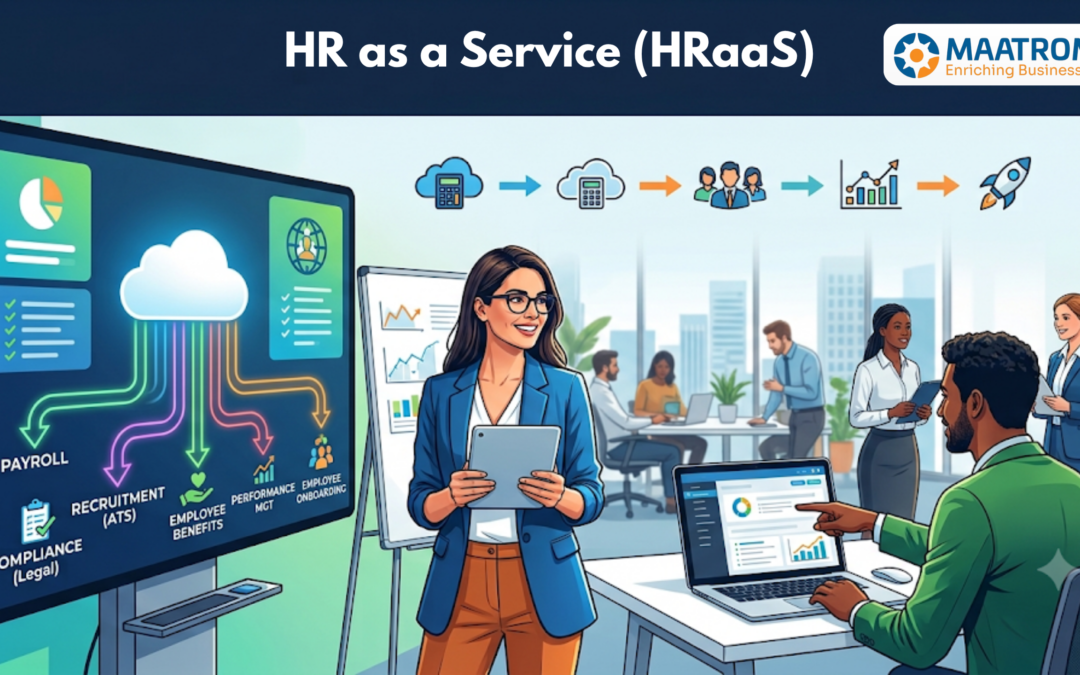
These services may include recruitment, employee onboarding, payroll processing, statutory compliance support, employee record management, and HR policy development.
The exact services depend on the provider, the business agreement, and the company’s requirements.
For example, a growing company may have an internal HR executive who handles employee communication and attendance. However, the company may need external support for payroll processing and statutory compliance. Through an HRaaS arrangement, it can outsource those specific functions rather than hire additional full-time employees for them.
Similarly, a startup without a dedicated HR team may need assistance with recruitment, employee documentation, payroll coordination, and HR policies.
HRaaS provides a flexible approach to managing these responsibilities.
How Is HRaaS Different from a Traditional HR Department?
A traditional HR department generally consists of employees within the organisation who manage HR activities. Depending on the company’s size, the team may include recruiters, payroll executives, HR managers, and compliance specialists.
HRaaS allows a company to access external HR expertise for some or all of these activities.
The main difference is how HR support is organised and delivered.
- Traditional HR model: The company employs its own team to manage HR functions internally.
- HRaaS model: The company obtains selected HR services from an external provider.
- Hybrid HR model: The company retains an internal HR team while outsourcing specialised or time-consuming activities.
There is no single model that works for every organisation. The right choice depends on the company’s size, budget, workforce, industry, and internal capabilities.
How Does HR as a Service Work?
HRaaS generally follows a structured process. The service provider first understands the organisation’s requirements and then recommends the appropriate services.
Step 1: Understand the Business Requirements
The first step is to identify the HR challenges the company wants to address.
For example, a business may struggle with frequent hiring requirements, payroll errors, employee documentation, or statutory compliance deadlines.
An HR service provider reviews the company’s current processes, workforce requirements, and operational challenges before suggesting suitable support.
This assessment helps the business select relevant services instead of paying for functions it does not require.
Step 2: Select the Required HR Services
Once the requirements are identified, the company selects the services it wants to outsource.
These may include:
- Recruitment and staffing services
- Payroll management
- HR statutory compliance support
- Employee onboarding and documentation
- HR policies and procedures
- HR consultancy and workforce planning
A business may outsource a single activity or combine multiple services, depending on the provider’s capabilities and the agreed scope.
Step 3: Define Responsibilities and Processes
The company and service provider establish clear responsibilities.
For example, the company may be responsible for sharing accurate attendance records, salary changes, leave information, and employee details. The provider may process payroll based on the approved information and agreed procedures.
The arrangement should clarify reporting schedules, approval workflows, data security, service timelines, communication channels, and escalation procedures.
Clear responsibilities reduce confusion and help both parties work efficiently.
Step 4: Implement the HR Services
After the scope is agreed upon, the provider begins delivering the selected services.
For payroll management, this may involve collecting approved payroll inputs, calculating salary components, reviewing deductions, preparing payroll reports, and supporting the agreed compliance processes.
For recruitment, the process may include understanding job requirements, sourcing candidates, screening applications, coordinating interviews, and supporting candidate selection.
The exact activities depend on the service agreement and applicable requirements.
Step 5: Monitor Performance and Review Results
HRaaS is not simply about transferring work to an external provider. Businesses should regularly evaluate whether the arrangement is meeting their objectives.
Useful performance indicators include:
- Time taken to fill vacancies
- Payroll accuracy and processing timelines
- Completion of employee documentation
- Timely completion of agreed compliance activities
- HR service costs
- Employee queries and resolution time
Regular reviews help businesses identify gaps, improve workflows, and adjust services as their requirements change.
Key Services Included in HR as a Service
HRaaS can cover different HR activities depending on the provider. The following are common areas businesses may consider.
1. Recruitment and Staffing Services
Recruitment is an important HR function, but it can consume significant time and resources. Companies need to identify suitable candidates, review applications, conduct interviews, and coordinate hiring activities.
External recruitment support can help businesses manage these activities more systematically.
Recruitment and staffing services may include candidate sourcing, initial screening, interview coordination, and support for temporary or permanent workforce requirements.
For businesses experiencing rapid growth or frequent hiring needs, external recruitment support can help streamline the hiring process.
Maatrom HR Solution provides recruitment and staffing services to support businesses with their workforce requirements.
2. Payroll Management Services
Payroll management involves calculating employee salaries and processing payroll based on approved attendance, leave, salary structures, incentives, reimbursements, and deductions.
Even small errors can lead to employee dissatisfaction, repeated corrections, and additional administrative work.
Outsourced payroll support may include payroll input coordination, salary calculations, payroll reports, payslip preparation, and assistance with applicable payroll-related compliance processes.
Businesses should establish a clear approval process and ensure that the service provider receives accurate employee and attendance information.
Maatrom HR Solution offers payroll management services to help businesses organise their payroll operations.
3. HR Statutory Compliance Support
Businesses in India must assess and meet the labour and employment laws applicable to their establishment, workforce, and industry.
Depending on the applicable requirements, HR compliance activities may involve Provident Fund (PF), Employees’ State Insurance (ESI), professional tax, tax-related payroll documentation, registers, returns, and other statutory obligations.
The applicable requirements may differ according to establishment type, employee eligibility, workforce strength, location, and current legislation.
An external HR service provider can help businesses organise documentation, track relevant deadlines, maintain records, and coordinate applicable compliance activities.
However, outsourcing does not automatically remove the employer’s legal responsibilities. Companies should clearly define responsibilities and verify that their arrangements meet applicable legal requirements.
Maatrom HR Solution provides HR statutory compliance support to help businesses manage their HR and compliance processes more systematically.
4. Employee Onboarding and Documentation
Employee onboarding involves collecting required documents, communicating company policies, completing joining formalities, and maintaining accurate employee records.
When onboarding processes are inconsistent, businesses may experience missing documents, delayed joining formalities, and incomplete employee files.
HR service support can help standardise onboarding checklists, coordinate documentation, and establish organised employee record management procedures.
A structured process helps employees understand their responsibilities and supports a smoother joining experience.
5. HR Policies and Consultancy
Companies need clear HR policies to guide employee conduct, attendance, leave, workplace behaviour, and internal procedures.
Growing businesses may not always have the resources to develop and review these policies internally.
HR consultancy can help organisations assess existing practices, identify process gaps, and develop suitable HR policies and procedures.
Depending on the engagement, support may include employee handbook development, HR process improvement, workforce planning, and guidance on HR administration.
Policies should be tailored to the organisation and reviewed against applicable laws rather than copied from another business.
What Are the Benefits of HR as a Service?
HRaaS can offer several advantages when the services are selected and managed appropriately.
1. Helps Control HR Operating Costs
Hiring a full internal team for every HR function may not be practical for all businesses.
Outsourcing selected functions can reduce the need to recruit additional specialists and maintain separate internal processes for every activity. Businesses should compare the total cost of outsourcing with the total cost of managing the function internally.
2. Saves Time on Administrative Work
Payroll coordination, employee documentation, recruitment administration, and compliance tracking require regular attention.
External support can help reduce the workload associated with selected activities, allowing business owners and internal HR teams to spend more time on workforce planning, employee engagement, and operational priorities.
3. Provides Access to HR Expertise
Different HR activities require different skills. Recruitment, payroll, and statutory compliance each involve specialised processes.
Working with an experienced service provider may give businesses access to relevant expertise without requiring them to recruit a separate specialist for every function.
Businesses should assess the provider’s experience, service scope, data protection practices, and ability to support their specific requirements.
4. Supports Business Growth
As a company grows, its HR requirements often become more complex. More employees can mean more recruitment, payroll inputs, employee records, and compliance activities.
An appropriately designed HRaaS arrangement can help businesses adjust their level of support as workforce requirements change.
5. Improves Process Consistency
Documented procedures, standardised checklists, approval workflows, and regular reporting can make HR operations more consistent.
Consistent processes reduce avoidable confusion and make it easier to identify errors.
6. Helps Organise Compliance Activities
Compliance obligations can involve multiple documents, deadlines, and eligibility conditions.
External support can help businesses maintain compliance calendars, organise records, and coordinate applicable statutory activities.
Who Should Consider HRaaS?
HRaaS may be useful for organisations with different workforce sizes and operational requirements.
Startups: Businesses establishing their first HR processes may need support with recruitment, payroll, employee documentation, and policies.
Small and medium-sized enterprises: SMEs may require professional HR support without building a large internal HR department.
Growing companies: Organisations hiring employees across teams or locations may need additional recruitment, payroll, and compliance support.
Businesses with limited HR resources: Companies with small HR teams can outsource selected administrative or specialised activities.
Companies seeking process improvement: Organisations experiencing repeated payroll corrections, inconsistent documentation, or inefficient recruitment workflows may benefit from reviewing their current processes.
How to Choose the Right HRaaS Provider
The right service provider is important because HR activities involve employee information, payroll data, business processes.
Review Experience and Expertise
Ask about the provider’s experience with your industry, workforce size, hiring requirements, and applicable compliance processes.
Check Data Security Practices
HR service providers may handle sensitive employee and salary information. Understand how data is accessed, stored, transferred, and protected. Confirm the confidentiality and security obligations in the service agreement.
Confirm Reporting and Communication
Ask how frequently reports will be shared, who will manage queries, and how urgent issues will be escalated.
Evaluate Costs and Service Conditions
Compare the service fee with the scope of work, implementation costs, additional charges, and contract terms. The lowest-priced option may not offer the support your business requires.
Clarify Compliance Responsibilities
Confirm which activities the provider will perform and which responsibilities remain with your company. Ensure the agreement identifies approval requirements, submission timelines, record ownership, and escalation procedures.
Why Consider Maatrom HR Solution for HR Support?
Managing recruitment, payroll, and statutory compliance requires time, coordination, and organised processes. Businesses need HR support that reflects their workforce requirements and operational priorities.
Maatrom HR Solution provides HR-related services to help organisations manage important workforce activities.
Our services include:
- Recruitment and Staffing Services: Support for business hiring and workforce requirements.
- Payroll Management Services: Support for organised payroll processing and related activities.
- HR Statutory Compliance Services: Support for managing applicable HR compliance processes.
We encourage businesses to assess their current HR processes, identify operational gaps, and select the services that best match their requirements.
Looking for HR support for your business?
Contact Maatrom HR Solution to discuss your recruitment, payroll management, and HR statutory compliance requirements.
Website: https://www.maatromhrsolution.com/
Conclusion
HR as a Service (HRaaS) offers businesses a flexible way to access HR expertise and manage selected human resource activities through an external service provider.
From recruitment and staffing to payroll management, employee documentation, and statutory compliance support, HRaaS can help businesses organise their processes, manage administrative workloads, and adapt to changing workforce requirements.
The key to success is selecting the right services, establishing clear responsibilities, protecting employee information, and reviewing performance regularly.
For startups, SMEs, and growing organizations, the right combination of internal HR management and external support can create a more practical and efficient HR operating model.
Maatrom HR Solution supports businesses through recruitment and staffing, payroll management, HR consultancy, and statutory compliance services. Contact our team to discuss how we can support your organisation’s HR requirements.
Frequently Asked Questions
1. What is HR as a Service (HRaaS)?
HR as a Service is a model in which businesses obtain selected human resource services from an external provider. These services may include recruitment, payroll management, employee documentation, HR consultancy, and statutory compliance support.
2. What services are included in HRaaS?
Depending on the provider, HRaaS may include recruitment and staffing, payroll management, employee onboarding, documentation, HR policy development, HR consultancy, and statutory compliance support.
3. Can HRaaS help businesses manage payroll?
Yes. An HRaaS provider that offers payroll services may assist with payroll inputs, salary calculations, payslips, payroll reports, and related compliance processes. The exact scope depends on the agreement and the provider’s capabilities.
4. Does HRaaS help with labour law compliance in India?
An HRaaS provider may help businesses organise compliance documentation, monitor relevant deadlines, and coordinate applicable statutory processes. Businesses must confirm the services covered and ensure their legal obligations are met under the laws applicable to their establishment.
5. How can Maatrom HR Solution support my business?
Maatrom HR Solution offers recruitment and staffing services, payroll management, HR consultancy, and statutory compliance support. Businesses can contact our team to discuss their specific requirements and identify suitable services.
Recent Comments